

Resources to support your heart journey

Find materials to help you take the next step toward a healthier tomorrow.

Educational guides and brochures

Explore resources designed to help you understand MitraClip Therapy, prepare for conversations with your cardiologist, and feel confident about your next steps.

Understanding Mitral Regurgitation brochure

An overview of the types of mitral regurgitation and treatment options available

Download

A Guide to Treating Your Mitral Regurgitation (English)

Everything you need for your MitraClip Therapy procedure
Download

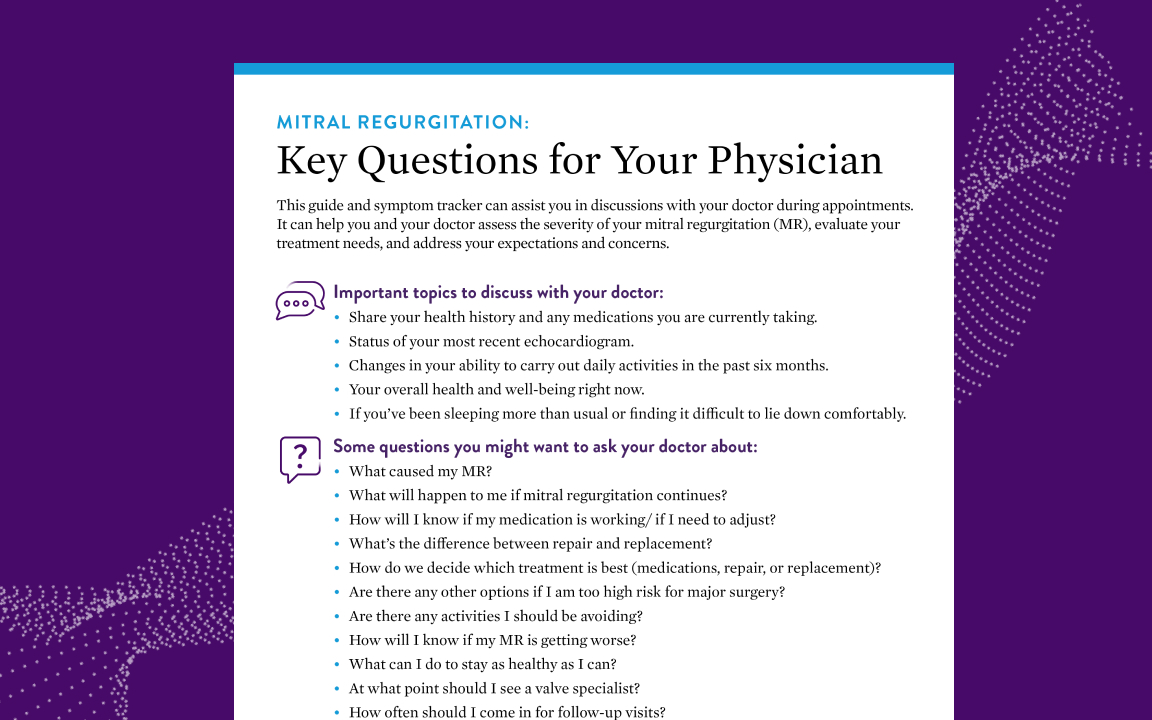
Doctor Discussion Guide (English)

Track your symptoms and prepare to talk to your doctor about MitraClip Therapy

Download

MitraClip Quick Guide

A quick overview for those who are considering MitraClip Therapy

Download

Guía para el tratamiento de la insuficiencia mitral (Español)

Todo lo que necesita para su procedimiento de terapia MitraClip
Descargar

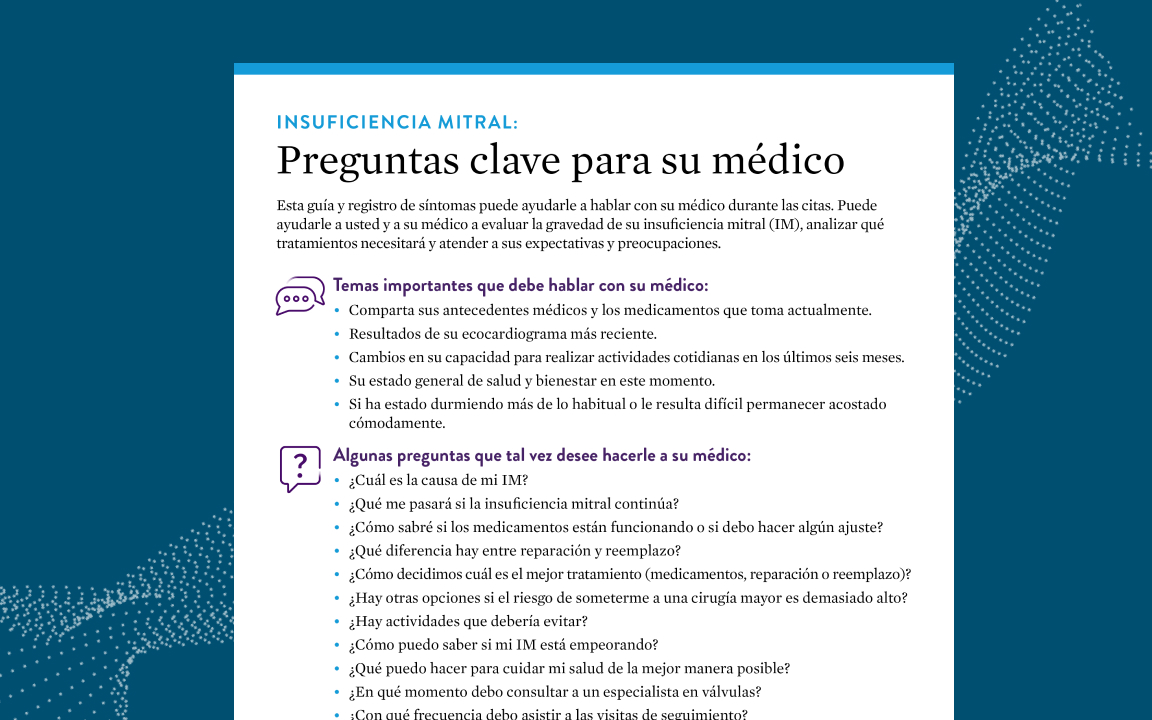
La Guía de Discusión
(Español)

Registre sus síntomas y prepárese para hablar con su médico sobre la terapia MitraClip

Descargar

Is MitraClip Therapy right for me?

Use our quick questionnaire to see if you might be a candidate for MitraClip Therapy.

Start Questionnaire

A PBS special on mitral regurgitation

Watch the PBS documentary from the Emmy award-winning series Medical Stories exploring the impact of mitral regurgitation and lives changed by treatment.


Watch Now

Find a MitraClip Therapy cardiologist near me

Find a cardiologist near me

Meet with a specialized care team experienced with the MitraClip Therapy procedure.
Important Safety Information

What is MitraClip™ Therapy approved for?

Available by prescription only.

MitraClip therapy is a minimally invasive procedure approved for treating patients with clinically significant mitral regurgitation due to either (a) a deteriorated mitral valve in patients who are deemed to be at prohibitive risk for surgery, or (b) mitral valve in patients who have heart failure and reduced pumping function who remain symptomatic despite maximally tolerated medications to treat their heart failure.

Patients should work with their doctor and a multidisciplinary heart team, which may include a heart surgeon and cardiologist with experience treating heart failure, to confirm their surgical risk and to ensure that they are on the optimal medications. The heart team will determine if transcatheter edge-to-edge valve repair is clinically appropriate, and if the patient meets the indications for the MitraClip procedure.

Who should not have the MitraClip Procedure?

Patients that have any of the following conditions may not be good candidates for the MitraClip Procedure: Patients with intolerance or allergy to procedural anticoagulation, untreatable hypersensitivity to implant components (nickel-titanium alloy, cobalt-chromium alloy), or active endocarditis or other active infection of the mitral valve.

What are the possible complications associated with the MitraClip Procedure?

As with any medical procedure, there is a possibility of complications. The most serious complications of the MitraClip procedure includes, but are not limited to: death, stroke (a condition in which decreased blood flow to the brain can result in brain damage and may cause severe disability), transient ischemic attack (stroke symptoms that last only a few minutes), major vascular complications (damage to a major blood vessel that may require emergency surgery or urgent cardiac surgery), life threatening bleeding event (a major bleeding event that requires a blood transfusion).  For additional potential risks and complications, please consult with your physician or heart team.

Talk to your doctor to learn more about the risks associated with MitraClip Therapy and ask for the detailed Important Safety Information if you'd like to review the full list of complications.

MAT-2600331 v1.0 | Item approved for U.S. use only